Jul. 7, 2025
I’ve been meaning to write this for a couple of weeks, so let’s get to it - things are moving to fast to reflect too long; which is it’s own risk.
In March, I wrote about how I was using AI in coding , which was Codeium (now Windsurf) in VS Code for completions, and ChatGPT and Claude online for architecture questions and code gen that was more than half a function.
Mar. 3, 2025
There’s still plenty of controversy about LLMs for coding, and not without reason. But I thought I’d run through what I’ve tried, and where I’ve landed for using AI. Also what the pitfalls are, where it’s useful and how it’s changed my practice.
Issues
Training data
The training data for large language models generally is problematic. There’s no doubt that they have been trained on copyright material. With code it’s slightly less murky since there is a high availability of good quality open source data with attached licenses to train models on. No doubt this include code written by people who don’t approve of it being used by AI, but I think the popular reading of most open source licenses is that using it for training is fine.
Jul. 29, 2024
Now Ollama has made it simple enough for anyone who can use a terminal to run large language models locally, naturally I’ve gone overboard downloading too many to play with. I’m increasingly feeling they definitely have a place in the devops/coding arsenal of tools, but which model is best?
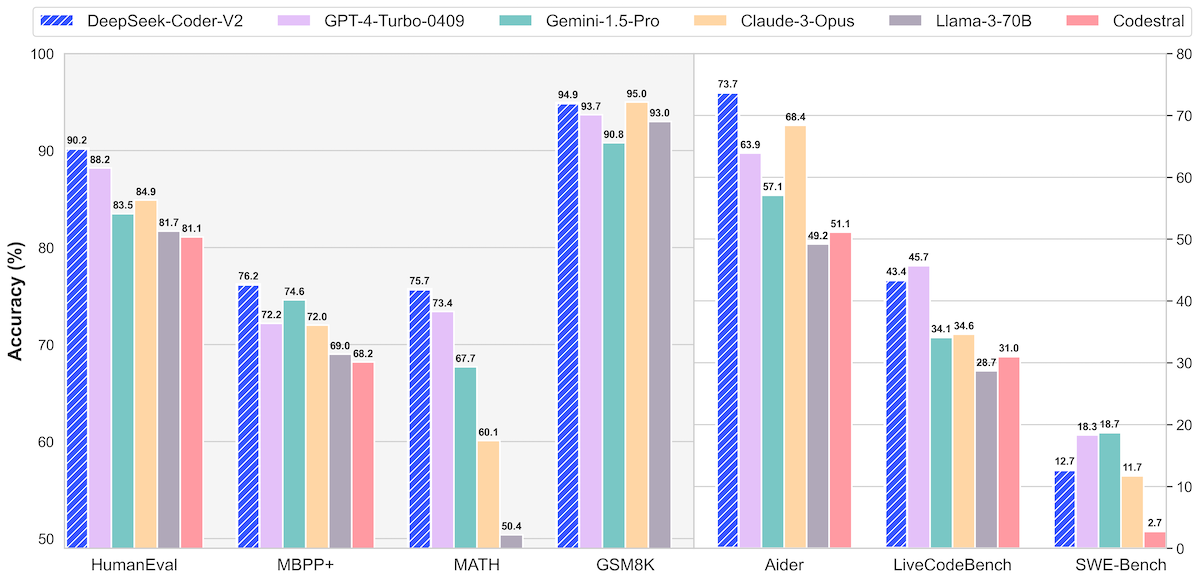
If you go on HuggingFace to look at a new model you’re interested, they often have great comparisons like this.
Jul. 1, 2024

This post looks at the context for some of my thinking about AI for supporting software development, and where I’ve landed on it for the time being.
The landscape
I briefly wrote about ChatGPT’s coding ability at the end of 2022. The wide availability of this tool marked the beginning of what I think can fairly be described as a revolution. The controversies that have crystalised since have not dampened my amazement of this step forward in what compute can do, especially around natural language processing.