Mar. 31, 2025
A large part of the reason for my use of Nginx Proxy manager over vanilla NGINX, is that it has built-in Let’s Encrypt certificate requesting and renewing. This works perfectly for all my public facing services, and until recently, my homelab services. Before I dive into how I’ve fixed the problem I ran into, I better explain how my homelab domain is set up, and before I do that, an over-simplified description of how the SSL system works is required
Dec. 9, 2024
When I’m spinning up side projects, I frequently ignore auth, and just rely on NGINX basic auth - one of the side benefits of reverse-proxying everything.
Regular NGINX
This article in the docs explains how to set up basic auth to protect different paths. To make it work in my node apps, I need the successful user name passed in so I check it against the user table to work out access rights etc.
Nov. 11, 2024
Having figured out how to use the GitHub package registry, I was a bit inspired by this blog post from Florin Lipan to deliver all my little static websites as Docker containers. I’m not as focused as he is about making them tiny, but I did steal the idea of using BusyBox httpd for serving them, resulting in about 4MB containers. That’s small enough for me, and since they are all very similar, there’s a fair bit of layer reuse going on.
Sep. 16, 2024

If you’re used to running NGINX Proxy Manager in front of your web apps, and switch to running it in a container, you’re going to need to learn a little about Docker networks to get everything connected. If you just do your regular setup, and direct the proxy for an address to 127.0.0.1:<some port>, it won’t exist, and you’ll visit your page to find the “502 Bad Gateway openresty” message.
Apr. 15, 2024
I’ve mentioned using NGINX as an interface between the internet and a service a while ago. This works by all incoming traffic coming to NGINX, and NGINX determining which service that traffic should go (from the NGINX config files) then acting as a middleman. This functionality is generally referred to as a ‘reverse proxy’.
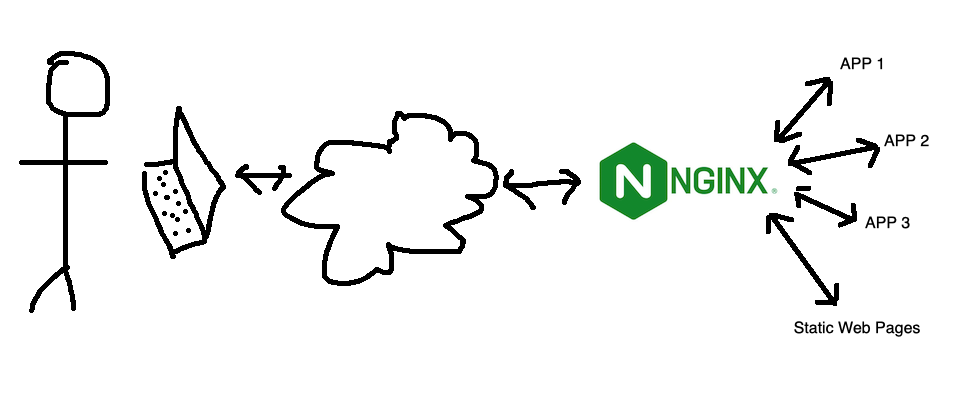
This is nice for a few reasons: